Why Buying Local Matters: Where Your Dollar Actually Goes
Independent local businesses recirculate about 3x more of each dollar in their communities than chains. Here's the research and what it means when you shop.
Key takeaways
- Across 10 U.S. communities, independent retailers and restaurants recirculated 52.3% of their revenue locally, versus 15.8% for national chains, roughly 3.3 times as much (Civic Economics for the American Booksellers Association).
- The gap comes from what a business spends money on: local staff and owners, local suppliers, local accountants and printers, and donations to local causes.
- In Salt Lake City, local restaurants recirculated 79% of revenue, compared with 30% for chain restaurants.
- Buying American-made is a separate choice from buying local. It supports U.S. factory jobs, and when you buy it from a local independent store you get both benefits.
When you hand $20 to a cashier, the sale is only the start. Some of that money pays the clerk. Some goes to the company that made the product, and some covers rent, insurance, advertising and the accountant. Where those next payments go decides how much of your $20 keeps working in your town.
That's the core idea behind "buy local," and researchers have measured it. Here is what the numbers show, what they don't show, and how to use them when you shop.
What is the local multiplier effect?
The local multiplier effect is the extra economic activity created when money spent at a business gets re-spent nearby. A locally owned hardware store pays its owner, who lives in town. It may use a local bookkeeper, bank with a community lender, print flyers at the shop down the street and sponsor the Little League team. Each of those payments becomes someone else's local income, and part of it gets spent locally again.
A national chain also employs local people, which matters. But much of its overhead is centralized. Accounting, marketing, purchasing and profits mostly flow to a headquarters somewhere else. So less of each dollar makes a second or third lap around your community.
Economists sometimes describe this as "leakage." Every dollar that leaves the local economy early is a dollar that can't support another local paycheck.
How much more money stays local at independent businesses?
The best-known measurements come from Civic Economics, an economic research firm that has studied independent and chain businesses in many cities. In a national summary published with the American Booksellers Association, the firm combined surveys of 106 independent retailers and 28 independent restaurants in 10 communities, collected in 2011 and 2012. It tracked four channels of local spending:
- wages and benefits paid to local workers
- profits paid to local owners
- goods and services bought from local suppliers
- charitable giving in the community
It then compared the results with publicly reported data for national chains.
Share of revenue recirculated in the local economy
Independent businesses vs. national chains, percent of revenue
IndependentChain
The 10-community figures come from Civic Economics surveys of 106 retailers and 28 restaurants in 2011–12. The Salt Lake City figures come from a separate Civic Economics study summarized by ILSR.
Source: Civic Economics / ABA (2013) · ILSR (2012)
View the data
| Group | Independent | Chain |
|---|---|---|
| 10 communities: retail + restaurants | 52.3% | 15.8% |
| 10 communities: retailers only | 47.7% | 13.6% |
| Salt Lake City: retailers | 52% | 14% |
| Salt Lake City: restaurants | 79% | 30% |
The results were consistent. Independent retailers and restaurants together returned 52.3% of their revenue to the local economy. For the chains, the figure was 15.8%. Independents recirculated about 3.3 times as much. Looking at retailers alone, the split was 47.7% versus 13.6%, or about 3.5 times as much.
An earlier Civic Economics study in Salt Lake City, summarized by the Institute for Local Self-Reliance (ILSR), found the same pattern. Local retailers there recirculated 52% of revenue against 14% for chains. Restaurants showed an even wider gap: 79% for local restaurants versus 30% for chain restaurants. Restaurants often hire more staff per dollar of sales, and local ones are more likely to buy from nearby suppliers.
What happens to $100 spent locally?
Another way to picture this is to follow a fixed amount of money. ILSR studied businesses in mid-coast Maine, and the American Independent Business Alliance (AMIBA) cites the findings in its primer on the multiplier effect.
Local spending generated by $100 at the register
Mid-coast Maine study, dollars of additional local economic activity
Source: AMIBA, The Local Multiplier Effect (ILSR Maine study)
View the data
| Label | Value |
|---|---|
| Locally owned businesses | $45 |
| Big-box chain | $14 |
In that study, $100 spent at locally owned businesses generated $45 of additional local economic activity. The same $100 at a big-box chain generated $14. That's the same purchase amount with a very different local result.
Why do independent businesses keep more money in town?
It isn't because local owners are more generous people. It comes down to how the business is set up:
- Owners live locally. Profits are paid to people who spend them in the same community instead of to distant shareholders.
- Back-office work is bought locally. Chains run accounting, legal, design and marketing at headquarters. Independents hire local firms for this.
- More local sourcing. Independent restaurants, grocers and gift shops are more likely to carry regional products and buy from nearby producers.
- Local giving. The Civic Economics surveys counted charitable contributions, and independents gave more of their revenue to local causes.
This also explains why the restaurant gap is so large. A restaurant spends a big share of its revenue on people and ingredients. When both come from nearby, most of the money stays in the region.
Is buying American-made the same as buying local?
They are related, but they aren't the same thing, and it's worth being precise.
- Buying local is about who you buy from: a locally owned business keeps more of your money circulating in your community.
- Buying American-made is about where the product was made: it supports U.S. factory jobs and suppliers, wherever those factories are.
A Darn Tough sock knitted in Vermont supports American manufacturing jobs whether you buy it in Burlington or online. A local boutique that sells imported goods still recirculates more of your money than a chain does. The strongest choice combines both: American-made products bought from a locally owned store.
Labels matter here too. Under Federal Trade Commission rules, an unqualified "Made in USA" claim means "all or virtually all" of the product is made in the United States. If you're unsure about a label, read our plain-English guide to the FTC standard.
How can you shop local without overspending?
You don't need to change every purchase to make a difference. Here are a few practical approaches:
- Shift one category. Pick something you buy often, such as coffee, books, hardware or gifts, and move that spending to an independent store.
- Buy local where expertise matters. Independent hardware stores, bike shops and kitchen stores often give advice a warehouse store can't.
- Choose regional makers. Many states have long-running brands. Kentucky, for example, has Ale-8-One ginger soda and Louisville Slugger bats. Browse American-made products from Kentucky or Vermont.
- Ask your local shop to stock American-made. Independent retailers decide what to carry, and customer requests count.
- Eat at independent restaurants. That's where the Salt Lake City data found the biggest difference.
When you do shop online, choosing products that are actually made in the USA still supports American manufacturing jobs. Our directory lists American-made products along with the state where each one is made and a linked source for the claim.
Where to start


Louisville Slugger
Louisville Slugger Genuine Mix Unfinished Natural Clear Baseball Bat
Made in KY
See price on Amazon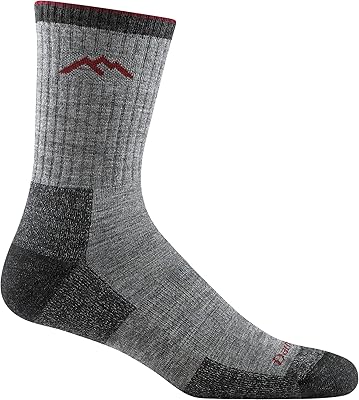
These are three examples from our directory, made in Kentucky and Vermont. Each product page shows where it's made and links the maker's own source.
The bottom line
The research on buying local is consistent across cities and years. Independent businesses send roughly three times more of each dollar back into their communities than national chains. You don't need to spend more to get that benefit, only to choose where some of your regular spending goes. When you also choose products made in the USA, the same purchase supports your neighbors and American workers.
Sources
- Indie Impact Study Series: National Summary (Indies give back over three times as much as chains)Civic Economics / American Booksellers Association, Bookselling This Week, January 17, 2013
- Independent Businesses Deliver Bigger Economic Benefit (Salt Lake City study)Institute for Local Self-Reliance, August 16, 2012
- The Local Multiplier EffectAmerican Independent Business Alliance (AMIBA)
- Complying with the Made in USA StandardFederal Trade Commission, July 2024