American-Made Cast Iron: How Lodge and Field Company Still Pour Skillets in U.S. Foundries
Lodge has poured cast iron in Tennessee since 1896, and Field Company makes skillets across the Midwest. How U.S. cast iron is made, plus foundry data in charts.
Key takeaways
- Lodge calls itself the oldest and longest-running cast iron manufacturer in the U.S. It has poured iron in South Pittsburg, Tennessee, since 1896, and today ships an average of about one million pounds of iron product a week.
- Field Company is headquartered in New York's Hudson Valley, with production and fulfillment across Indiana, Illinois and Wisconsin. It says its skillets are made start to finish in the USA.
- Cast iron cookware is still made the old way, in sand molds. Lodge's induction furnace runs above 2,000°F and holds 10 metric tons of molten iron.
- The wider U.S. foundry industry has shrunk: Federal Reserve data put foundry output in 2025 about 48% below its 1979 level, and BLS counts about 104,200 foundry workers in August 2026, down from about 161,000 in 2006.
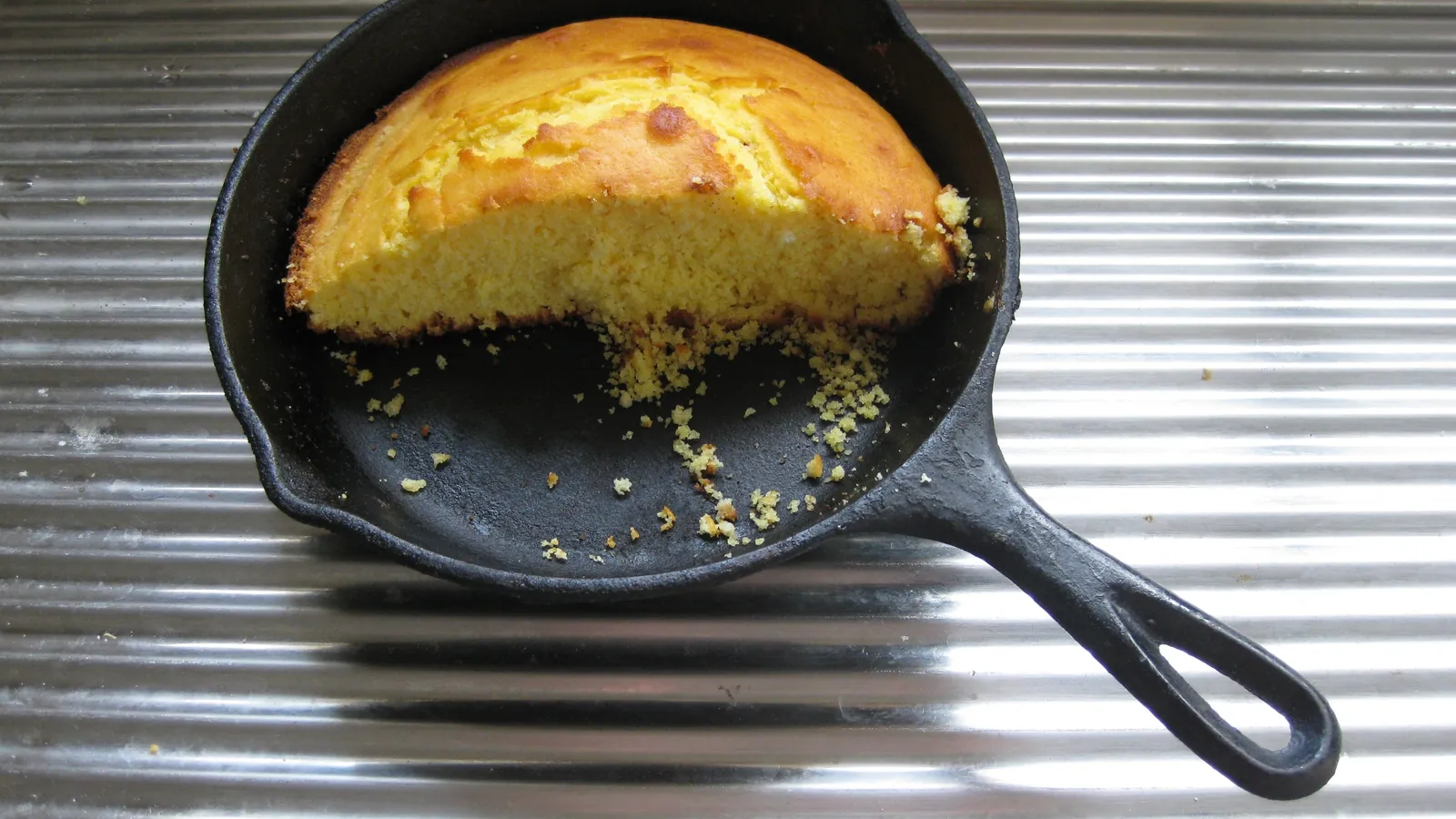
Yes, you can still buy cast iron skillets made start to finish in the United States. The best-known maker, Lodge, has poured iron in South Pittsburg, Tennessee, since 1896. Newer makers such as Field Company produce lighter skillets in Midwestern foundries. Cast iron is one of the few kitchen categories where American production never went away, even as the wider U.S. foundry industry shrank.
Here's how these pans are made, who makes them and what the data say about the foundries behind them.
Who still makes cast iron cookware in the USA?
Lodge describes itself as the oldest and longest-running cast iron manufacturer in the United States. According to the company's history:
- The business started as Blacklock, when founder Joseph Lodge fired up a long-dormant railroad foundry in South Pittsburg in 1896. It made sad irons, tea kettles, kitchen sinks and cookware.
- In May 1910, fire destroyed the building. Lodge bought land a few blocks away, and the new foundry was pouring iron by August 1910, just three months later. That foundry is still operating.
- A second plant, the 127,000-square-foot "3rd Street Foundry," ran its first production in November 2017. Lodge says it raised potential manufacturing capacity by 75%.
- Lodge says it ships an average of one million pounds of iron product every week, all melted, poured, molded, finished and packaged in South Pittsburg.
Field Company takes a different approach. It's headquartered in New York's Hudson Valley, and its production and fulfillment run across Indiana, Illinois and Wisconsin, where it works with local foundries and craftspeople. The company says each skillet is "made from start to finish in the USA." In our directory, the Field Company No.6 skillet lists Wisconsin and Indiana as its origin.
How is a cast iron skillet made?
The basic method, sand molding, is ancient. Lodge notes it dates back to around 680 B.C. Here's how it works at Lodge today, according to the company:
- Melt. Pig iron, recycled steel, scrap castings and alloys go into an electric induction furnace that runs above 2,000°F and holds 10 metric tons of liquid iron. A 22,000-pound charge takes about 45 minutes to melt.
- Mold. A Disamatic molding machine presses a mix of sand, water and clay against a pattern of the pan. Each machine makes 350 to 400 molds an hour, and Lodge runs five of them.
- Pour and break out. Molten iron is poured into the sand mold. Sand melts at a higher temperature than iron, so the mold holds its shape. Once the iron cools, the sand is broken away.
- Finish and season. Pans are cleaned, then sprayed with oil and baked at high temperature to create a ready-to-use surface.
Lodge says it automated its molding in 1950 and in 1965 became the first American company to use a Disamatic, a Danish machine.
When did cast iron start coming pre-seasoned?
Lodge says it debuted seasoned cast iron cookware in 2002, an industry first. Before that, cast iron was sold with a thin coat of carnauba wax to prevent rust on store shelves. Buyers had to wash the wax off, then oil and bake the pan themselves before cooking.
What has happened to America's foundries?
Cookware is a small part of a much bigger industry. Foundries cast engine blocks, pipe fittings, valves, machine parts and countless other components. The Federal Reserve tracks their combined output:
U.S. foundry output, 1972–2025
Industrial production index, annual average, 2017 = 100
Our annual averages of the seasonally adjusted monthly index. Covers all foundries (iron, steel, aluminum and other metals), not just cookware. The index was 83.8 in September 2026.
Source: Federal Reserve Board via FRED (IPG3315S)
View the data
| Year | Index (2017 = 100) |
|---|---|
| 1972 | 138.9 |
| 1973 | 157.6 |
| 1974 | 158.4 |
| 1975 | 132.6 |
| 1976 | 135.5 |
| 1977 | 141.1 |
| 1978 | 151.5 |
| 1979 | 154.0 |
| 1980 | 130.2 |
| 1981 | 126.5 |
| 1982 | 94.1 |
| 1983 | 94.3 |
| 1984 | 111.2 |
| 1985 | 103.8 |
| 1986 | 100.0 |
| 1987 | 103.2 |
| 1988 | 112.4 |
| 1989 | 112.1 |
| 1990 | 107.4 |
| 1991 | 99.9 |
| 1992 | 100.1 |
| 1993 | 106.8 |
| 1994 | 118.2 |
| 1995 | 123.6 |
| 1996 | 127.2 |
| 1997 | 138.5 |
| 1998 | 139.6 |
| 1999 | 142.6 |
| 2000 | 140.3 |
| 2001 | 128.2 |
| 2002 | 123.7 |
| 2003 | 117.3 |
| 2004 | 125.4 |
| 2005 | 128.4 |
| 2006 | 133.0 |
| 2007 | 128.4 |
| 2008 | 109.8 |
| 2009 | 83.2 |
| 2010 | 96.2 |
| 2011 | 104.3 |
| 2012 | 105.1 |
| 2013 | 105.4 |
| 2014 | 111.2 |
| 2015 | 106.6 |
| 2016 | 98.6 |
| 2017 | 100.0 |
| 2018 | 101.4 |
| 2019 | 95.8 |
| 2020 | 76.8 |
| 2021 | 81.1 |
| 2022 | 83.9 |
| 2023 | 81.3 |
| 2024 | 80.5 |
| 2025 | 80.3 |
Foundry output peaked in the mid-1970s, collapsed in the early-1980s recession, and recovered to near its old highs by the late 1990s. Since 2000 the trend has been mostly down. The index averaged 80.3 in 2025, about 48% below its 1979 level of 154.0 and roughly 20% below 2017. It has been fairly flat in 2026, at 83.8 in September.
Jobs tell a similar story:
U.S. foundry jobs, 2006–2025
All employees, thousands, annual average
Our averages of BLS monthly, seasonally adjusted estimates. August 2026 (preliminary): 104.2 thousand.
Source: U.S. Bureau of Labor Statistics (CES3133150001)
View the data
| Year | Employees (thousands) |
|---|---|
| 2006 | 161.2 |
| 2007 | 154.9 |
| 2008 | 148.3 |
| 2009 | 113.0 |
| 2010 | 111.8 |
| 2011 | 122.1 |
| 2012 | 127.9 |
| 2013 | 125.3 |
| 2014 | 126.4 |
| 2015 | 125.1 |
| 2016 | 117.9 |
| 2017 | 116.7 |
| 2018 | 119.7 |
| 2019 | 119.1 |
| 2020 | 103.0 |
| 2021 | 103.6 |
| 2022 | 107.3 |
| 2023 | 107.3 |
| 2024 | 104.4 |
| 2025 | 101.1 |
The Bureau of Labor Statistics counted about 161,200 foundry workers on average in 2006. That fell to about 113,000 in 2009, recovered to around 128,000 in 2012, then dropped again in 2020. In 2025 it averaged about 101,100. The preliminary August 2026 figure is about 104,200.
How do you care for a cast iron skillet?
Keep it simple. Wash it with hot water and a brush (a little mild soap is fine), dry it right away, and rub in a thin layer of cooking oil while it's still warm. Avoid soaking it or putting it in the dishwasher. The more you cook with it, the better the seasoning gets.
Why buy an American-made cast iron skillet?
A few practical reasons stand out:
- It lasts. A well-kept cast iron pan can be passed down for generations. There's no coating to wear off, and a rusty pan can usually be scrubbed and re-seasoned, so the cost per year of use is tiny.
- You know where it's made. Lodge and Field Company say publicly where their skillets are produced. Still, always check the label on the specific item. A brand's full catalog isn't necessarily made in one place, and the FTC's "Made in USA" standard requires "all or virtually all" of a product to be made here.
- It supports real factory jobs. About 104,000 people work in U.S. foundries today, roughly a third fewer than in 2006. Buying from domestic foundries helps keep that know-how, and the supply chains around it, in American towns like South Pittsburg.
Here are the American-made cast iron pieces in our directory:


The Lodge 10.25-inch skillet is the classic all-rounder. The 5-quart Dutch oven handles braises, bread and chili. The Field Company No.6 is smaller and lighter, with a smooth cooking surface. For more, see products made in Tennessee, products made in Wisconsin or all American-made kitchen goods, including USA Pan bakeware from Pennsylvania and Nordic Ware from Minnesota.
Sources
- The Lodge Foundry: How It's MadeLodge Cast Iron, Accessed October 26, 2026
- Where Are Field Skillets Made?Field Company, Accessed October 26, 2026
- Industrial Production: Manufacturing: Durable Goods: Foundries (NAICS = 3315) (IPG3315S)Board of Governors of the Federal Reserve System, via FRED, Data through September 2026
- Foundries, all employees (CES3133150001)U.S. Bureau of Labor Statistics, Current Employment Statistics, Data through August 2026