How to Find and Verify American-Made Products: A 6-Step Checklist
A practical checklist for confirming a product is really made in the USA: read the exact claim, find the maker's source, check the specific item, and spot red flags.
Key takeaways
- Start with the exact wording. “Made in USA” is a legal claim that means all or virtually all U.S.-made. “Assembled in USA,” “Designed in USA” and “American-owned” mean something different.
- Trust the maker's own statement over badges and flags, and check the specific product, because many brands make some items here and import others.
- Look for specifics: a named city, factory or mill is a strong signal. Vague patriotism is not evidence.
- In our directory, 73 of 81 products carry an unqualified Made in USA claim, 2 carry qualified claims such as “Assembled in the USA,” and 6 are marked “Origin under review.”
A flag on the box, a red-white-and-blue logo or a brand that sounds American doesn't tell you where something was made. This guide walks through the six checks we use before a product goes into the Best of USA Store directory. You can run them yourself in a few minutes on any product, in a store or online.
Step 1: What exactly does the label say?
Start with the precise words, because each common phrase has a different meaning:
- “Made in USA” (unqualified). Under the FTC's standard, this means “all or virtually all” of the product is made in the U.S.: final assembly or processing happens here, all significant processing happens here, and the product has no more than negligible foreign content. Since 2021 the FTC's Made in USA Labeling Rule (16 CFR Part 323) has made false claims on labels subject to civil penalties.
- Qualified claims, such as “Made in USA of U.S. and imported parts” or “Assembled in USA.” These are honest when accurate, and they tell you some content came from abroad. “Assembled in USA” requires the last substantial transformation to happen here.
- “Designed in USA,” “American-owned,” “American company.” These say nothing about where the product was manufactured.
- No origin statement at all. Imported goods generally must be marked with their country of origin, but online listings don't always show it clearly. Absence of a claim isn't proof either way.
For a deeper look at the legal standard and recent enforcement, read what “Made in USA” legally means.
Step 2: Does the manufacturer itself say where it's made?
Go to the brand's own website: the product page, an “About” or “Our factory” page, or an FAQ. A manufacturer's public statement is the best evidence an ordinary shopper can get, because the company is accountable for it under FTC rules. Retailer badges, reseller copy and review comments are weaker, since they're often written by people with no direct knowledge.
On Best of USA Store, every product page names the state and, where we can, the city, along with the source we relied on. Read how we verify listings.
Step 3: Does the claim cover this specific product?
This is the step people skip most often. Many brands make some products in America and import others. The phrase “we manufacture in the USA” on a homepage doesn't guarantee that the model, size or color you're buying is one of them. Check the claim for the exact item, and when a listing says “imported” for one variant, assume the brand's lines are mixed.
Step 4: Is the claim specific, and does it hold up?
Specific claims are easier to trust because they're easier to check:
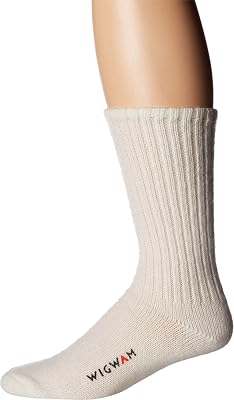
- Strong: a named factory, mill or foundry, and a city. Examples from our directory: Wigwam socks are knit in Sheboygan, Wisconsin, where the company has made socks since 1905. Field Company says its skillets are cast at a Wisconsin foundry and then machined and seasoned in Indiana.
- Honest but qualified: Leatherman says its tools are made at its Portland, Oregon factory, and it labels them “Made in America (USA & Global Parts).” That parenthetical is exactly the kind of fine print worth reading.
- Weak: “proudly American,” “USA quality” or “American spirit,” with no place named.


What do the products in our directory look like?
When we apply these checks, most products pass with an unqualified claim, a few carry honest qualifiers, and some can't be confirmed yet. Here's how our directory breaks down today:
How the products in our directory are labeled
81 products, as of October 24, 2026
Source: Best of USA Store directory data
View the data
| Segment | Value | Share |
|---|---|---|
| Made in USA | 73 | 90.1% |
| Qualified claim | 2 | 2.5% |
| Origin under review | 6 | 7.4% |
Products like the Vitamix 5200 (“Assembled in the USA” in Ohio) and Community Coffee (“Roasted in the USA” in Louisiana) show why qualifiers matter. Both involve real American work, but neither label claims that every input is domestic. Listings we can't yet confirm, such as some Kentucky-themed gifts, are labeled “Origin under review” rather than removed. That way shoppers can see the gap, and we can update the listing when evidence turns up.
Geography matters too. American manufacturing is spread across the country, and our directory currently covers 25 states:
Where our listed products are made: top 7 states
Number of products in the Best of USA Store directory, as of October 24, 2026
Kentucky is overrepresented compared with its share of U.S. manufacturing. XENA Intelligence, which publishes this site, is based in Louisville, Kentucky. 25 states are represented in total.
Source: Best of USA Store directory data
View the data
| State | Products |
|---|---|
| Kentucky | 25 |
| Pennsylvania | 9 |
| Wisconsin | 5 |
| Oregon | 4 |
| Tennessee | 4 |
| Illinois | 3 |
| Ohio | 3 |
You can browse by place on our shop by state section, or start with the people who make things near you. We cover the local angle in why buying local matters.
Step 5: What red flags should make you double-check?
- A claim that appears only in the product title, or a seller name that doesn't match the brand.
- An implausibly low price for a category that is normally expensive to make here, such as wool socks, cast iron or leather boots. This isn't proof of anything, but it's a reason to check the maker's site.
- Inconsistent statements: “Made in USA” in the headline but “imported” in the details.
- Origin language about a different product, like a brand page boasting about its U.S. factory when the item you want isn't made there.
- Only symbols, no words. A flag with no stated country of origin.
Step 6: What should you do if a claim seems false?
- Ask the company where the specific product is made. Many will answer within a day.
- Tell the retailer. Marketplaces have processes for inaccurate listings.
- Report it to the FTC at ReportFraud.ftc.gov. The FTC has repeatedly acted on deceptive origin claims, including a sweep announced in April 2026 and warning letters sent in July 2026.
- Tell us. If a product in our directory looks wrong, let us know, and we'll re-check the source and update or relabel the listing.
A quick checklist you can save
- Read the exact origin words. Is it unqualified, qualified, or just “designed” or “owned”?
- Confirm on the manufacturer's own site.
- Confirm the claim covers this exact model and variant.
- Look for a named city, factory or mill.
- Watch for red flags such as mismatches, symbols-only claims and odd sellers.
- When in doubt, ask, and report claims that seem false.
Ready to shop with confidence? Explore American-made apparel, tools and kitchenware, or browse every maker on our brands A–Z page. Every listing links to its origin source.
Sources
- Complying with the Made in USA StandardFederal Trade Commission
- 16 CFR Part 323: Made in USA Labeling RuleElectronic Code of Federal Regulations
- FTC Warns Companies Making Questionable Made in USA ClaimsFederal Trade Commission, July 6, 2026
- Best of USA Store product directory and verification methodBest of USA Store