How to Read a Clothing Label: Country of Origin, Fiber Content and RN Numbers
What a U.S. clothing label must say under FTC rules: country of origin, fiber content and the maker's name or RN number, plus how to spot genuinely American-made clothes.
Key takeaways
- Under FTC rules, most clothing sold in the U.S. must carry a label with three facts: fiber content, country of origin, and the manufacturer's name or RN number.
- A plain "Made in U.S.A." label is allowed only if the garment is made in the U.S. of U.S.-made materials. Otherwise it must say something like "Made in U.S.A. of imported fabric."
- On garments with a neck, the country of origin must be on the label at the inside center of the neck. Online listings must say "Made in U.S.A.," "imported" or both.
- An RN number is issued by the FTC only to U.S. businesses. You can look one up in the FTC's RN database to see which company made or sold the item.
The small tag sewn into your shirt is a legal document. Federal rules enforced by the Federal Trade Commission (FTC) decide what it must say, where it goes and what "Made in U.S.A." is allowed to mean. Once you know the rules, a clothing label tells you a lot about where something really came from.
What information must a clothing label include?
Under the Textile Fiber Products Identification Act and the Wool Products Labeling Act, most clothing and household textiles sold in the U.S. need a label with three things:
- Fiber content: the generic fiber names (cotton, polyester, wool and so on) and percentages by weight, in descending order.
- Country of origin: where the product was processed or manufactured.
- Who made or sold it: the company's full business name or its Registered Identification Number (RN).
A separate FTC rule, the Care Labeling Rule (16 CFR Part 423), requires care instructions on a permanent label. The FTC notes that fiber and care information can share the same label.
Where is the country of origin on a clothing label?
For any garment with a neck, the FTC requires the country of origin on the front of a label at the inside center of the neck, either midway between the shoulder seams or next to another label there. Fiber content and the maker's identity can go on the back of that label or on another accessible label, such as one on a side seam. The origin label can't be covered by another label.
Socks have their own rule: most must show the country of origin on the front of the package or label, next to the size.
What does "Made in U.S.A." mean on clothing?
This is where labels get precise. The FTC's guidance sets out four cases:
- "Made in U.S.A." (unqualified): the product is made completely in the U.S. of materials also made in the U.S.
- "Made in U.S.A. of imported fabric" or "Knitted in U.S.A. of imported yarn": U.S. manufacturing with imported materials. This must be a single statement.
- "Made in Sri Lanka, finished in U.S.A." and similar: processing happened in more than one country, and both must be named.
- Imported products: the label names the country where the product was processed or manufactured. "Made in the European Union" isn't specific enough.
The FTC gives an example: if a U.S. manufacturer dyes, prints and finishes imported greige (unfinished) fabric, it can't use an unqualified "Made in U.S.A." label.
Zippers, buttons and other parts that are exempt from fiber disclosure don't count when determining origin.
For a broader look at how the FTC defines U.S.-made products beyond clothing, see what "Made in USA" really means under the FTC rule.
What is the "one step removed" rule?
Clothing makers must consider where their materials came from, one step back in the supply chain. According to the FTC:
- a yarn maker must disclose imported fiber;
- a maker of knitted garments must disclose imported yarn;
- a maker of apparel sewn from cloth must disclose imported fabric.
That's why an American-made sweater knitted from imported yarn has to say so, while a garment sewn from U.S.-woven fabric can carry an unqualified label if everything else checks out.
What does an RN number on a clothing tag tell you?
An RN is issued by the FTC to businesses in the U.S. that make, import, market, distribute or handle textile, wool or fur products. RNs aren't issued to companies outside the U.S. Labels show it with the prefix, for example "RN 00001."
You can enter an RN into the FTC's RN database to find the company behind it. That's useful for identifying a store brand or an unfamiliar label.
How do you read fiber content percentages?
- Fibers are listed by weight, largest first, for example "65% rayon, 35% polyester."
- A single-fiber garment can say "100%" or "All", as in "All Wool."
- Fibers under 5% are generally listed as "other fiber". The exceptions are wool, which must always be named, and fibers with a real function, like 4% spandex for stretch.
- The FTC allows a 3% tolerance, so "40% cotton" could be 37% to 43%. There's no tolerance for "100%" claims.
Which items don't need these labels?
The Textile Act doesn't cover shoes, boots and slippers or hats and other headwear. Wool hats and wool slippers are covered by the Wool Rules, and socks and hosiery are covered. For footwear, look for origin claims from the brand itself and check them with our guide to verifying Made in USA products.
How do online listings disclose where clothes are made?
For catalogs and internet listings, the FTC requires product descriptions to say clearly whether an item is "Made in U.S.A.," "imported," or "Made in U.S.A. and imported", and that statement must match the label. "Made in U.S.A. or imported" means some units come from each source. Look for this line in product details before you buy.
Why is American-made clothing harder to find?
How much prices rose, September 1990 to September 2026
Percent change in the Consumer Price Index, seasonally adjusted
Index values: all items 132.5 to 336.298; footwear 118.2 to 152.359; apparel 125.4 to 136.875 (BLS series CUSR0000SA0, CUSR0000SEAE, CUSR0000SAA).
Source: U.S. Bureau of Labor Statistics, CPI
View the data
| CPI category | Change, Sept. 1990 to Sept. 2026 |
|---|---|
| All items | 153.8% |
| Footwear | 28.9% |
| Apparel | 9.2% |
One reason is price pressure. Bureau of Labor Statistics (BLS) data shows that from September 1990 to September 2026, the Consumer Price Index for all items rose 153.8%, while footwear prices rose 28.9% and apparel prices just 9.2%. Clothing has become far cheaper relative to everything else, and over the same period U.S. apparel manufacturing shrank sharply, as we detail in our look at American-made socks and the U.S. textile industry.
What are the penalties for mislabeling clothes?
The FTC treats violations of the Textile, Wool and Fur Acts as unfair or deceptive practices. According to its guidance, violators of an FTC administrative order face civil penalties of up to $53,088 per violation, and each mislabeled item counts as a separate violation. Customs can also hold improperly labeled imports.
Where can you find clothing that's truly made in the U.S.?
Look for an unqualified "Made in U.S.A." on the neck label, check the product listing's origin statement, and look up the RN if the brand is unfamiliar. A few American brands from our directory:

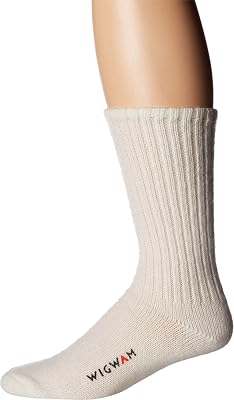


Filson is based in Washington state, Wigwam and Thorogood are from Wisconsin, and Darn Tough is from Vermont. Check each product's label and listing for its specific origin claim. Browse more American-made apparel or explore products by state.
Sources
- Threading Your Way Through the Labeling Requirements Under the Textile and Wool ActsFederal Trade Commission, Edited January 2025
- Consumer Price Index: Apparel (CUSR0000SAA), Footwear (CUSR0000SEAE), All items (CUSR0000SA0)U.S. Bureau of Labor Statistics, September 2026 data
- Care Labeling of Textile Wearing Apparel, 16 CFR Part 423Electronic Code of Federal Regulations