How to Read a Country-of-Origin Label: What U.S. Customs Rules Require on Imported Goods
Federal law requires most imported goods to show their country of origin in English. Here's what the CBP marking rules say, where to look and what labels mean.
Key takeaways
- Under 19 U.S.C. 1304 and CBP's rules in 19 CFR Part 134, almost every imported item, or its container, must be marked with the English name of its country of origin.
- The mark must be legible, indelible and permanent enough to reach the ultimate purchaser, usually the last person in the U.S. to receive the item in its imported form.
- If a U.S. place name such as "USA" or a U.S. city appears on an import in a way that could mislead, the foreign country must appear nearby, in comparable size, preceded by "Made in" or "Product of."
- The country of origin is where an item was made, produced or grown. Later work in another country changes the origin only if it causes a "substantial transformation."
- That matters: the U.S. imported about $2.4 trillion in goods from January to August 2026, with Mexico the largest source at about $419 billion.
Short answer: almost everything imported into the United States has to tell you where it came from. Federal law, 19 U.S.C. 1304, and U.S. Customs and Border Protection's rules in 19 CFR Part 134 require most foreign-made goods, or their containers, to carry the English name of the country of origin in a conspicuous, legible and permanent mark. Knowing how those rules work makes it much easier to spot what's imported and what's actually American-made.
Why does the country-of-origin label matter?
Because most of what's on store shelves crosses a border first. According to the Census Bureau's latest trade report, released October 6, 2026, the U.S. imported about $2.4 trillion in goods in just the first eight months of 2026. Ten countries supplied about 70% of that:
Where U.S. imports come from: top 10 countries
Goods imports, January–August 2026, billions of dollars (Census basis, not seasonally adjusted)
Total U.S. goods imports for the period were $2,415.2 billion; these 10 countries account for about 70.5%. Figures are year-to-date and subject to revision.
Source: U.S. Census Bureau, FT-900 Exhibit 14 (October 6, 2026)
View the data
| Country | Imports ($ billions) |
|---|---|
| Mexico | $419.3 |
| Canada | $269.6 |
| Taiwan | $186.9 |
| China | $183.5 |
| Vietnam | $176.1 |
| South Korea | $110.1 |
| Germany | $100.6 |
| Japan | $96.5 |
| Thailand | $92.7 |
| India | $68.0 |
Mexico was the largest source at about $419 billion, or roughly 17% of all goods imports, followed by Canada, Taiwan, China and Vietnam. The mix is shifting fast:
Shifting sources: 2025 vs. 2026
Goods imports, January–August, billions of dollars
Jan–Aug 2025Jan–Aug 2026
Census basis, not seasonally adjusted. 2025 figures from Exhibit 14a, 2026 from Exhibit 14.
Source: U.S. Census Bureau, FT-900 Exhibits 14 and 14a (October 6, 2026)
View the data
| Country | Jan–Aug 2025 ($B) | Jan–Aug 2026 ($B) |
|---|---|---|
| Mexico | $354.5 | $419.3 |
| Canada | $258.8 | $269.6 |
| Taiwan | $119.2 | $186.9 |
| China | $219.3 | $183.5 |
| Vietnam | $122.7 | $176.1 |
Compared with the same months of 2025, imports from China fell about 16%, while imports from Taiwan rose about 57% and Vietnam about 43%. Mexico was up about 18%. So the country printed on a box today may not be the one you'd have seen a year ago, which is one more reason to check.
What does U.S. law require on an import label?
Under §134.11, unless an exception applies, every article of foreign origin, or its container, must be marked:
- in a conspicuous place,
- as legibly, indelibly and permanently as the article allows,
- with the English name of the country of origin,
- so that it reaches the ultimate purchaser in the United States.
CBP defines the ultimate purchaser (§134.1(d)) as, generally, the last person in the U.S. who receives the article in the form in which it was imported. For a finished shirt, that's you. For a part that a U.S. factory turns into something new, it's usually the factory.
Where should you look for the country of origin?
CBP's rules (§134.41) say the mark should survive normal handling and be easy to find and read without strain. The regulation suggests methods that suit the material, such as marks that are die-sunk, molded or etched into metal, glazed onto ceramics or printed on paper. Practical places to check:
- Hard goods: the bottom, back or handle. Some tools must be marked permanently. Under §134.43, items like knives, forks, scissors, pliers, surgical instruments and vacuum containers must be die-stamped, cast-in-mold, etched, engraved or carry a securely attached metal plate (goods from USMCA countries can use any reasonable permanent method).
- Clothing and textiles: the sewn-in label, usually at the neck or side seam. Our guide to reading clothing labels covers the FTC textile rules too.
- Packaged goods: the back or bottom panel, near the manufacturer or distributor name.
What words and abbreviations are allowed?
Under §134.45, the label must use the country's full English name, with a few allowances:
- Clear abbreviations are OK if they're unmistakable, such as "Gt. Britain" or "Luxemb."
- Variant spellings that clearly mean the English name are OK, such as "Brasil" or "Italie."
- The adjective form can be acceptable, but not when it's part of a common product name that doesn't indicate origin. "English walnuts" or "Brazil nuts," for example, don't count.
- Goods from USMCA partners may be marked in English, French or Spanish.
Can an imported product say "USA" on it?
Yes, but with a safeguard. Under §134.46, if "United States," "American," "U.S.A.," the name of a U.S. city or location, or similar words appear on an import in a way that could mislead buyers about where it was made, the actual country of origin must appear:
- in close proximity to those words,
- in comparable size, and
- preceded by "Made in," "Product of" or similar words.
So if an imported product says something like "Designed in California" in a way that could mislead, it must also clearly say, for instance, "Made in Vietnam," right next to it and at least as large. §134.47 applies similar rules to souvenirs and trademarks that include U.S. place names.
What does "country of origin" actually mean?
Under §134.1(b), the country of origin is the country of manufacture, production or growth. If an item gets further work in another country, the origin changes only if that work produces a "substantial transformation," essentially a new article with a new name, character or use. Simple repackaging or minor assembly usually doesn't qualify. For goods from Mexico and Canada, the USMCA marking rules in 19 CFR Part 102 decide origin instead.
Are any imported goods exempt from labels?
Some. §134.32 lists general exceptions, including articles that can't be marked, crude substances and articles more than 20 years old. §134.33, the "J-List," exempts items such as eggs, cut flowers, bolts, nuts and washers, buttons, playing cards and lumber from individual marking. Even then, the outermost container that reaches the buyer generally must still be marked. If goods arrive improperly marked, CBP can issue a notice (Form 4647) requiring the importer to mark, export or destroy them (§134.51).
How is this different from a "Made in USA" label?
Country-of-origin marking is a customs rule for imports. A "Made in USA" claim on a domestic product is policed by the FTC, which requires that "all or virtually all" of the product be made in the U.S. Read our explainer on what "Made in USA" means under the FTC rule and our checklist for verifying Made in USA claims.
What American-made alternatives can you buy?
Pliers are on CBP's list of items that must be die-stamped, cast-in-mold or engraved with their origin when imported. If you'd rather buy American, here are some U.S.-made options:


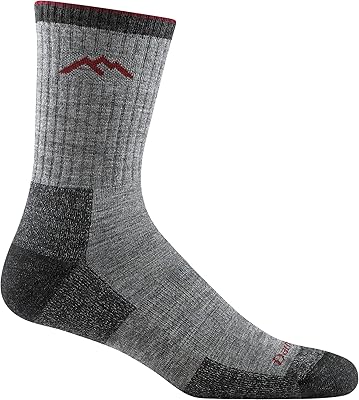
Channellock pliers are made in Pennsylvania, Estwing hammers in Illinois, and Darn Tough socks in Vermont. Browse all American-made tools or American-made apparel.
Sources
- 19 CFR Part 134: Country of Origin MarkingElectronic Code of Federal Regulations (eCFR), Accessed October 26, 2026
- Informed Compliance PublicationsU.S. Customs and Border Protection, Accessed October 26, 2026
- U.S. International Trade in Goods and Services, August 2026U.S. Bureau of Economic Analysis and U.S. Census Bureau, October 6, 2026
- FT-900, U.S. International Trade in Goods and Services, August 2026 (Exhibits 14 and 14a)U.S. Census Bureau, October 6, 2026