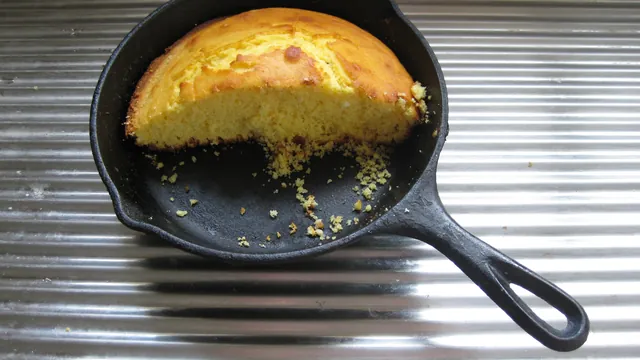
Tennessee Makers: Cast Iron, Candy, Beans and More Made in the Volunteer State
What Tennessee still makes: Lodge cast iron from South Pittsburg, Goo Goo Clusters from Nashville and Bush's beans, plus charts of the state's factory jobs.

Key takeaways
- Lodge has poured cast iron in South Pittsburg, Tennessee, since 1896. It says it ships about one million pounds of iron product a week, all melted, poured, molded, finished and packaged there.
- The Goo Goo Cluster, created in Nashville in 1912 by the Standard Candy Company, is widely described as America's first combination candy bar.
- Bush Brothers & Company began canning tomatoes in Chestnut Hill in 1908. Its main canning plant is still there, though headquarters moved to Knoxville.
- Tennessee had 354,100 manufacturing jobs in September 2026, per BLS. That's 20.0% above the February 2010 low of 295,000, while U.S. factory jobs grew 10.6% over the same stretch.
The short answer: Tennessee still makes things Americans use every day. A foundry in South Pittsburg has poured cast iron cookware since 1896. Nashville gave the country its first combination candy bar in 1912, and a cannery in tiny Chestnut Hill grew into one of the best-known bean brands in the U.S. Behind those names is a big factory workforce, about 354,100 manufacturing jobs as of September 2026. Here's what's made in Tennessee, with the numbers behind it.
Is Lodge cast iron still made in Tennessee?
Yes, start to finish. According to Lodge, founder Joseph Lodge fired up a long-dormant railroad foundry in South Pittsburg in 1896, under the name Blacklock. That building burned in May 1910. Three months later, in August 1910, a new foundry a few blocks south began pouring iron, and it still operates today.
Highlights from Lodge's own account of its foundry:
- 1950: The foundry moved from hand-pouring to an automated molding process.
- 1965: Lodge became the first American company to use a Disamatic, a Danish molding machine.
- 2002: Lodge introduced cast iron sold pre-seasoned, which it calls an industry first. Before that, pans came coated in wax that buyers had to wash off and season at home.
- November 2017: A second plant, the 127,000-square-foot "3rd Street Foundry," ran its first production. Lodge says it raises potential capacity by 75%.
- Today: Five Disamatic machines, each making 350 to 400 molds an hour. Lodge says it ships about one million pounds of iron product a week, all melted, poured, molded, finished and packaged in South Pittsburg.
The process is old-fashioned at heart. Molten iron goes into a mold of sand, water and clay. Sand melts at a higher temperature than iron, so the mold holds its shape until it's broken away. Each year during the National Cornbread Festival, Lodge opens its foundries to visitors.
We cover the craft in more depth in how Lodge and Field Company still pour skillets in U.S. foundries.


Where do Goo Goo Clusters come from?
Nashville. Howell H. Campbell Sr. started a candy business there in 1901, at age 19, with two copper kettles and about a dozen workers, according to the Tennessee Encyclopedia. In 1903 he reorganized it as the Standard Candy Company.
In 1912, Campbell and plant supervisor Porter Moore created a mound of caramel, marshmallow nougat and roasted peanuts covered in milk chocolate. Goo Goo Cluster calls it America's first combination candy bar, the first to mass-produce a candy with more than one main ingredient. The Tennessee State Museum agrees.
A few more details from those sources:
- Early Goo Goos were sold unwrapped under glass at drugstore candy counters. Later, workers wrapped them in foil by hand.
- The company began packaging them individually in the 1920s, which let the candy reach a wider market.
- Standard Candy was one of the main sponsors of the Grand Ole Opry from 1966 to 2006. Despite a popular belief, the name doesn't stand for "Grand Ole Opry."
- The company says the recipe hasn't changed, though production methods have.
What other snacks and foods are made in Tennessee?
Chattanooga has its own famous treat. The Tennessee State Museum says the MoonPie came to market in 1917 at the Chattanooga Bakery. The bakery had started in 1903 to use leftover flour from the Mountain City Flour Mill. By the 1950s it had dropped its other products to focus on MoonPies. Since 1994, the town of Bell Buckle has held an annual RC Cola-MoonPie Festival.
In East Tennessee, Bush's Best beans trace back to a general store owner named A.J. Bush. The Tennessee Magazine reports that in 1904 he built a tomato cannery in Chestnut Hill in partnership with the Stokely family. In 1908 he bought out the Stokelys, and Bush Brothers & Company was born. The company added pork and beans by 1934.
Headquarters later moved to Knoxville, but the main canning plant is still in Chestnut Hill, and the company also runs a plant in Augusta, Wisconsin. The magazine says the Bush's visitor center there draws more than 150,000 visitors a year.


How many manufacturing jobs does Tennessee have?
About 354,100 in September 2026, seasonally adjusted, according to the Bureau of Labor Statistics. The long-run picture looks a lot like the national one: a high plateau in the 1990s, a steep slide in the 2000s and a steady climb back after 2010.
Tennessee manufacturing jobs, 1990–2026
Thousands of jobs, annual average of monthly seasonally adjusted figures
2026 is the average of January through September.
Source: U.S. Bureau of Labor Statistics, TNMFG via FRED
View the data
| Year | Manufacturing jobs (thousands) |
|---|---|
| 1990 | 499.3 |
| 1991 | 485.6 |
| 1992 | 498.4 |
| 1993 | 508.9 |
| 1994 | 520.3 |
| 1995 | 525.8 |
| 1996 | 509.2 |
| 1997 | 504.5 |
| 1998 | 505.2 |
| 1999 | 501.1 |
| 2000 | 494.1 |
| 2001 | 451.1 |
| 2002 | 425.4 |
| 2003 | 410.2 |
| 2004 | 408.9 |
| 2005 | 406.0 |
| 2006 | 397.1 |
| 2007 | 377.7 |
| 2008 | 358.6 |
| 2009 | 306.9 |
| 2010 | 297.1 |
| 2011 | 302.8 |
| 2012 | 311.7 |
| 2013 | 316.6 |
| 2014 | 323.0 |
| 2015 | 331.1 |
| 2016 | 342.1 |
| 2017 | 346.9 |
| 2018 | 351.1 |
| 2019 | 355.6 |
| 2020 | 335.7 |
| 2021 | 349.5 |
| 2022 | 364.4 |
| 2023 | 365.5 |
| 2024 | 363.6 |
| 2025 | 355.6 |
| 2026 | 354.0 |
The key points in the BLS series:
- Peak: 532,300 jobs in March 1995.
- Low: 295,000 in February 2010, after the Great Recession.
- Pre-pandemic: 355,900 in December 2019.
- Recent high: an annual average of 365,500 in 2023.
- 2026 so far: an average of 354,000 from January through September, a little below 2024 and 2025.
Has Tennessee recovered faster than the rest of the country?
Since the 2010 low, yes. From February 2010 to September 2026, Tennessee's manufacturing jobs grew 20.0%. Over the same months, U.S. factory jobs grew 10.6%, from about 11.44 million to 12.65 million.
Factory job growth since the February 2010 low
Percent change in manufacturing jobs, February 2010 to September 2026
Source: U.S. Bureau of Labor Statistics, TNMFG and MANEMP via FRED
View the data
| Area | Change, Feb. 2010 to Sept. 2026 (%) |
|---|---|
| Tennessee | 20.0% |
| United States | 10.6% |
The longer view is less rosy. Compared with January 2000, Tennessee's factory jobs are down 29.4%, a bit steeper than the national drop of 26.8%. In other words, the state lost more jobs in the 2000s and has won back more since. For a state-by-state comparison, see which states have the most manufacturing jobs.
How can you tell if a Tennessee product is really made there?
A famous hometown doesn't guarantee that a given item was made there. Three quick checks:
- Read the label. Under the FTC's rule, an unqualified "Made in USA" claim means all or virtually all of the product is made in the U.S. See what the "Made in USA" label legally requires.
- Check the maker's own site. Lodge, for example, spells out exactly which steps happen in South Pittsburg.
- Look for the town, not just the state. Specific claims like "Nashville" or "South Pittsburg" are easier to verify than "Tennessee proud."
Our 6-step checklist for verifying American-made products walks through more.
Where can you buy Tennessee-made products?
Start with our Tennessee page, which lists every verified Tennessee product in the directory, or our ranked list of the best products made in Tennessee. For gifts, Lodge cast iron fits the best American-made kitchen and cookware list, and Goo Goo Clusters are on our best American-made snacks, candy and treats list. Bush's beans appear among the best American-made pantry staples and sauces.
Looking for the state next door? Read about Kentucky makers, from bourbon to bats.
Sources
- The Lodge Foundry: How It's MadeLodge Cast Iron, accessed October 29, 2026
- About Goo Goo ClusterGoo Goo Cluster (Standard Candy Company), accessed October 29, 2026
- Standard Candy CompanyTennessee Encyclopedia, Tennessee Historical Society, accessed October 29, 2026
- Goo Goos and MoonPies: Tennessee TraditionsTennessee State Museum, accessed October 29, 2026
- The Best They Can (Bush's Beans history)The Tennessee Magazine, accessed October 29, 2026
- All Employees: Manufacturing in Tennessee (TNMFG)U.S. Bureau of Labor Statistics, via FRED, Federal Reserve Bank of St. Louis, accessed October 29, 2026
- All Employees, Manufacturing (MANEMP)U.S. Bureau of Labor Statistics, via FRED, Federal Reserve Bank of St. Louis, accessed October 29, 2026