How to Shop American-Made on Amazon: 7 Checks Before You Click Buy
A practical checklist for finding genuinely Made in USA products on Amazon: what the FTC rules require, which phrases to distrust, and how to verify a listing.
Key takeaways
- An unqualified "Made in USA" claim online has to meet the same FTC standard as on a store shelf: all or virtually all of the product made in the U.S., with final assembly and all significant processing here.
- "Ships from the USA" or a U.S. warehouse address is not an origin claim. The FTC warns that many overseas-made products ship from U.S. distribution centers.
- For clothing and other textiles, federal rules require online ads to say whether the item is made in USA, imported, or both. Look for that line in the listing.
- Trust specific claims (a named U.S. factory or city, "Made in USA of U.S. and imported parts") over vague ones ("American brand," "designed in California").
- Online shopping keeps growing: e-commerce was 17.1% of U.S. retail sales in the second quarter of 2026, up from 0.9% in 2000, per Census.
The short answer: you can find genuinely American-made products on Amazon, but you have to read the listing. Searching "made in USA" isn't enough. Treat every listing like a label. Look for a specific origin claim, check the details section, and ignore anything that only tells you where the box ships from. The seven checks below take about two minutes per product.
Why does this matter more every year?
More of our shopping happens online, where you can't turn the box over and read the label.
E-commerce share of U.S. retail sales
Percent of total retail sales, seasonally adjusted, second quarter of each year
Source: U.S. Census Bureau, Quarterly E-Commerce Report, ECOMPCTSA via FRED
View the data
| Year (Q2) | E-commerce share of retail (%) |
|---|---|
| 2000 | 0.9% |
| 2001 | 1.1% |
| 2002 | 1.4% |
| 2003 | 1.7% |
| 2004 | 2.0% |
| 2005 | 2.4% |
| 2006 | 2.8% |
| 2007 | 3.3% |
| 2008 | 3.6% |
| 2009 | 3.9% |
| 2010 | 4.4% |
| 2011 | 4.8% |
| 2012 | 5.3% |
| 2013 | 5.8% |
| 2014 | 6.3% |
| 2015 | 7.0% |
| 2016 | 7.8% |
| 2017 | 8.7% |
| 2018 | 9.6% |
| 2019 | 10.3% |
| 2020 | 16.3% |
| 2021 | 14.6% |
| 2022 | 14.2% |
| 2023 | 15.3% |
| 2024 | 16.1% |
| 2025 | 16.3% |
| 2026 | 17.1% |
Census data show e-commerce rising from 0.9% of U.S. retail sales in the second quarter of 2000 to 10.3% in 2019. It jumped to 16.3% during the 2020 lockdowns and reached 17.1% in the second quarter of 2026. That's roughly one retail dollar in six.
Do the Made in USA rules apply to online listings?
Yes. The FTC's Made in USA Labeling Rule (16 CFR Part 323) covers labels and also mail-order and online promotional materials that make a Made in USA claim. The FTC's business guide says the standard applies to claims "in advertising and promotional materials," including Internet and e-mail marketing.
The standard for an unqualified claim is strict:
- Final assembly or processing happens in the U.S.
- All significant processing happens in the U.S.
- All or virtually all ingredients and components are made and sourced in the U.S.
For more detail, read our explainer on what "Made in USA" means under the FTC rule.
Check 1: Is there a specific origin claim in the listing?
Look in the title, the bullet points and the product description for a clear statement such as "Made in USA," "Made in Vermont" or "Handcrafted in Grand Rapids, Michigan." Specific places are a good sign, because a seller is less likely to invent a named U.S. town. Vague phrases are not origin claims:
- "American company" or "American-owned"
- "Designed in USA" or "Engineered in California"
- "Family business since 1950" with no factory location
- A U.S. flag icon with no text
Check 2: What does the product details section say?
Many Amazon listings have a details or specifications section, and some include a country of origin field. If a field says "USA" and the description agrees, that's helpful. If the field is blank, says another country, or conflicts with the title, trust the more specific and less flattering one. Amazon's listing layout changes over time, so this field may not appear on every page.
Check 3: Does it say "ships from" rather than "made in"?
This is the most common trap. In a March 2023 consumer alert, the FTC warned that "Ships from the USA" doesn't always mean "Made in the USA." It noted that products made overseas are often shipped to distribution centers in the U.S. before going to buyers, and it named online marketplaces including Amazon and Etsy. Where a package ships from says nothing about where it was made.
Check 4: Is the claim qualified? Read the qualifier.
Honest sellers of mixed-origin products often use a qualified claim. The FTC's guide gives examples such as "60% U.S. content" and "Made in USA of U.S. and imported parts." These are legitimate and often reflect real U.S. jobs. They just aren't the same as all-American.
"Assembled in USA" is a separate claim. The FTC says it requires the product's principal assembly, and its last substantial transformation, to happen in the U.S. Simple "screwdriver" assembly of imported parts doesn't qualify. In one FTC example, a lawn mower with 15–20% foreign content could still say "Assembled in USA." Our guide to country-of-origin labels walks through each phrase.
Check 5: For clothing, look for the required textile line
Clothing and home textiles have their own rule. Under 16 CFR 303.34, mail-order and online ads for covered textile products must say whether the product was made in U.S.A., imported, or both. If an apparel listing doesn't say, or says "imported," you have your answer. For more, see how to read clothing labels.
Check 6: Does the brand's own website back it up?
Search the brand's name and look for an "About," "Our factory" or FAQ page. Real U.S. makers usually say where they work, often with photos or tours. A few examples from our directory:
- Uncle Goose makes basswood alphabet blocks in Grand Rapids, Michigan.
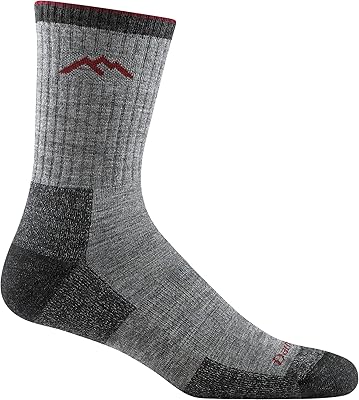
- Darn Tough knits socks in Northfield, Vermont.
- Igloo makes many of its coolers in Texas. Check each listing, since product lines vary.


If the brand's site is vague, look at the packaging photos on the listing. The printed "Made in ___" line on the box or tag is sometimes visible. Our step-by-step guide on how to verify Made in USA products covers more research tricks.
Check 7: Do reviews and the seller's details add up?
The FTC's 2023 alert suggests a few habits for any online purchase:
- Search the seller or store name with words like "scam" or "complaint."
- Read the reviews, especially photos of the actual label.
- Check the return policy before you buy.
- Pay with a credit card, which gives you more protection if something goes wrong.
Reviews that mention a different origin than the listing ("the tag says Made in China") are a red flag.
What should you do if a claim turns out to be false?
Return the item and report the problem. The FTC accepts reports at ReportFraud.ftc.gov, and its business guidance lists MUSA@ftc.gov for Made in USA questions. You can also report the listing to the marketplace. Reports help the FTC spot repeat offenders.
What's the fastest way to start?
Start from a list of products that have already been checked. Every product on Best of USA Store links to a page that names its U.S. maker and state. Browse by category or start with American-made gifts, then run the same checks before you buy.
Sources
- 16 CFR Part 323: Made in USA Labeling RuleFederal Trade Commission, Electronic Code of Federal Regulations, current as of October 2026
- Complying with the Made in USA StandardFederal Trade Commission, accessed October 27, 2026
- 'Ships from the USA' doesn't always mean 'Made in the USA'Federal Trade Commission, Consumer Advice, March 17, 2023
- 16 CFR 303.34: Textile products, mail order and internet advertisingElectronic Code of Federal Regulations, current as of October 2026
- E-Commerce Retail Sales as a Percent of Total Sales (ECOMPCTSA)U.S. Census Bureau, via FRED, Federal Reserve Bank of St. Louis, accessed October 27, 2026