Real or Artificial Christmas Tree: Which One Is Actually American-Made?
US farms cut about 14.5 million Christmas trees in 2022, while most imported holiday decor comes from China. Here's where trees are grown and how to buy one locally.
Key takeaways
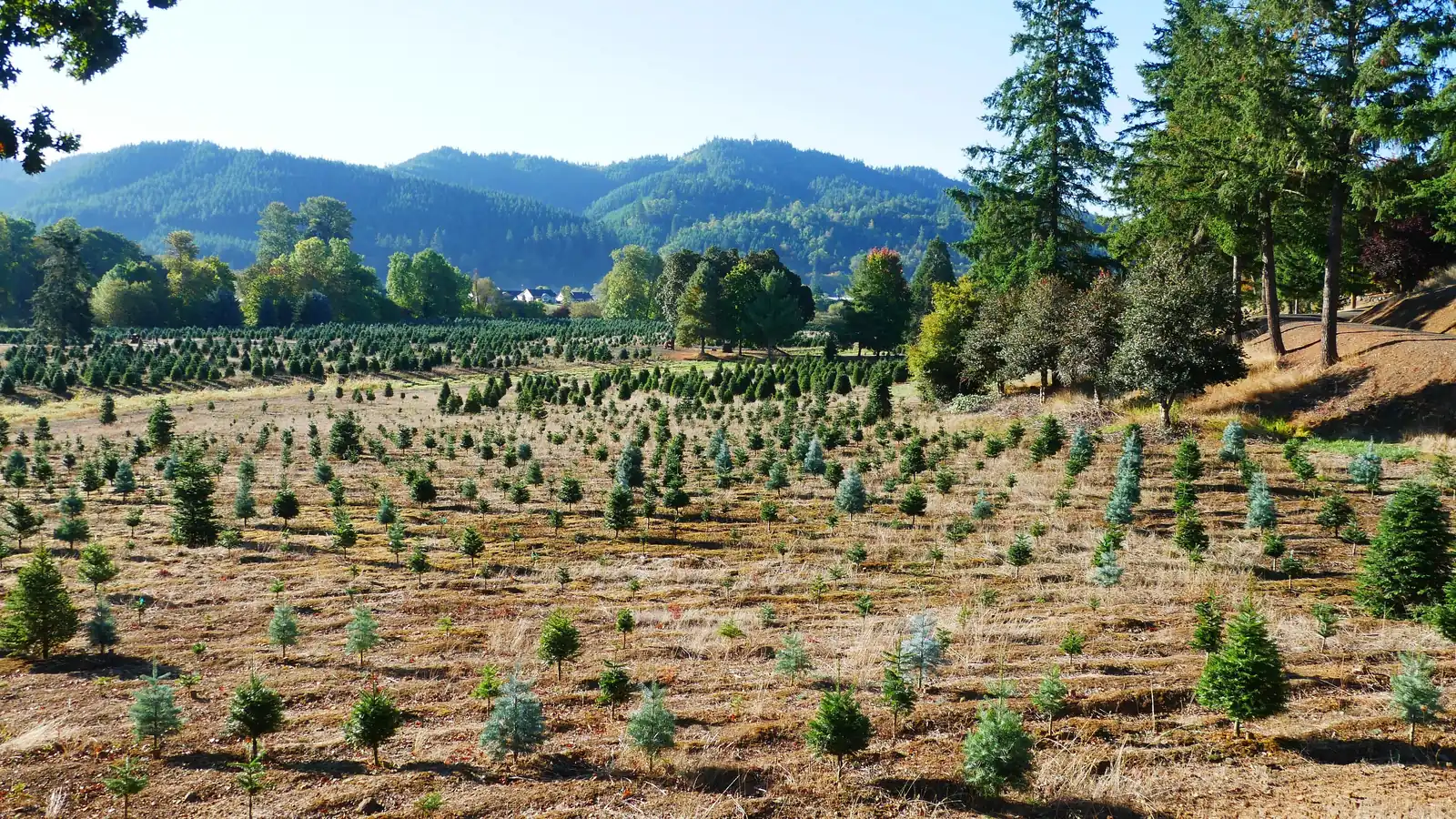
- A real tree is almost always American-grown. US farms cut 14,548,694 Christmas trees in 2022, according to the USDA Census of Agriculture, and all 50 states had at least one farm growing them.
- Three states grow most of them. Oregon, North Carolina and Michigan together accounted for about two-thirds of the trees cut in 2022.
- Most holiday decor is imported. The US imported $2.97 billion of Christmas decorations from China in 2024, 86.8% of all such imports, per the Census Bureau. That trade category includes artificial trees.
- Buying local is easy here. A choose-and-cut farm, a farm stand or a national forest permit puts your money straight into a US grower's or land manager's hands.
If you want an American-made Christmas tree, buy a real one. Nearly every fresh tree sold in the US is grown on a US farm, while most artificial trees and holiday decorations are imported, mainly from China. The most local option is a choose-and-cut farm near you.
That's the short answer. Below is what the federal data shows about where trees are grown, where artificial trees and decorations come from, and how to make sure your holiday money stays close to home.
Are real Christmas trees grown in the USA?
Yes. The USDA's Census of Agriculture, which counts every US farm every five years, found that American farms cut 14,548,694 cultivated Christmas trees in 2022. They came from 10,121 farms that harvested trees that year, and 16,612 farms had a combined 292,050 acres of Christmas trees in production.
That's a slight dip from 2017, when farms cut 15,094,678 trees, a decline of about 3.6%. Still, it adds up to millions of trees grown, cut and sold by US farm businesses each year the census counts.
The industry is also spread out. Every one of the 50 states reported at least one farm with Christmas trees in production in 2022, from 3 farms in Alaska to 1,695 in Oregon. Wherever you live, a grower is probably within driving distance.
Which states grow the most Christmas trees?
Production is concentrated in a few places with the right climate and soils for firs, spruces and pines.
Which states grow America's Christmas trees?
Cultivated Christmas trees cut in 2022, top 10 states, number of trees
US total: 14,548,694 trees cut on 10,121 farms in 2022. The Census of Agriculture is taken every five years; 2022 is the latest.
Source: USDA NASS, 2022 Census of Agriculture, Table 35
View the data
| State | Trees cut, 2022 |
|---|---|
| Oregon | 4,823,877 |
| North Carolina | 3,208,419 |
| Michigan | 1,799,391 |
| Washington | 936,904 |
| Pennsylvania | 721,480 |
| Wisconsin | 601,199 |
| Virginia | 578,777 |
| New York | 318,745 |
| Ohio | 189,240 |
| Minnesota | 153,600 |
- Oregon led with 4,823,877 trees cut in 2022, about 33% of the national total.
- North Carolina was second with 3,208,419, down 20.4% from 2017.
- Michigan was third with 1,799,391, up 16.0% from 2017.
Together, those three states cut about two-thirds of all US Christmas trees in 2022. Washington posted the biggest jump among the top 10, rising 75.1% from 535,046 trees in 2017 to 936,904 in 2022.
Pennsylvania, Wisconsin, Virginia and New York round out the list of big growers, and 12 states cut more than 100,000 trees each. If you'd like to support a state's makers beyond the tree farm, browse Made in Oregon, Made in North Carolina and Made in Michigan.
Where do artificial Christmas trees come from?
Mostly from overseas. The Census Bureau doesn't publish a headline figure for artificial trees alone, but it does report on the trade category it calls Christmas decorations (HS 9505.10). In the US tariff schedule, that heading covers "articles for Christmas festivities," and it has separate lines for artificial Christmas trees alongside ornaments and nativity scenes.
Here's what the Census Bureau reports for that category:
- 2024: The US imported $2.97 billion of Christmas decorations from China, 86.8% of all US imports of Christmas decorations.
- 2023: Imports from China were $2.82 billion, or 88.0% of the total.
- Lights, too: The US imported $301.3 million of LED Christmas tree light strings in 2024, and 66.6% of that came from Cambodia.
That doesn't mean no artificial tree is ever made here. But if one is, the box should tell you. Under the FTC's Made in USA Labeling Rule (16 CFR Part 323), an unqualified "Made in USA" claim means final assembly happened in the US and all or virtually all of the parts were made and sourced here. "Designed in USA" or a flag on the carton isn't an origin claim. Our guide to reading country-of-origin labels explains the fine print.
How do you buy a Christmas tree locally?
Real trees make buying local unusually easy. Here are your options, from most to least direct:
- Choose-and-cut farms. You walk the rows, pick a tree and pay the grower directly. You know exactly where it was grown because you're standing there.
- Farm stands and farmers markets. Many growers sell pre-cut trees and wreaths at their own stands or at seasonal markets. See our look at farmers markets by the numbers.
- A national forest permit. Many national forests sell Christmas tree permits, often online through Recreation.gov. Recreation.gov notes that the permits help thin crowded stands of small-diameter trees. Each forest sets its own dates, cutting areas and rules, so read the permit before you go.
- Lots run by local groups. Seasonal lots run by local businesses, churches, scouts or civic clubs may send part of the money to community causes. Ask which farm and state the trees came from.
- Big-box stores. Ask where their trees were grown, too. Less of the money tends to stay in your town. Our breakdown of why buying local matters shows where your dollar goes.
What questions should you ask before you buy a tree?
A few quick questions tell you most of what you need to know:
- Where was this tree grown? A good seller can name the farm or at least the state.
- When was it cut? At a choose-and-cut farm, the answer is today.
- Do you make your own wreaths and garland? Many farms do, and that's another locally made purchase.
- Is the stand or the tree skirt made here? Accessories often aren't. Check the label before you assume.
Can you make the rest of your holiday decor American-made?
Yes, if you mix a few made-in-USA pieces in with what you already own. You don't need to replace everything at once. Add one or two pieces a year that you'll keep for decades.
Some verified picks from our directory:
- An heirloom ornament: Hampshire Pewter casts its Sleigh Ride ornament in Somersworth, New Hampshire. More makers are on our Made in New Hampshire page.
- The scent of a fresh tree: The Yankee Candle Balsam & Cedar large jar candle is made in Massachusetts. Find more on our best American-made candles list.
- A cozy cup for tree-trimming night: Elmwood Inn Fine Teas Christmas in a Cup is made in Danville, Kentucky, and sold through A Taste of Kentucky.


For more ideas, see our American-made holiday gift guide, the stocking stuffers roundup, our state-by-state local holiday gifts guide, the best American-made gifts list and every pick in the gifts category.
What if you already own an artificial tree?
Keep using it. The tree you already own is the one you don't have to buy again. You can still support US makers through what goes on it and around it: an American-made ornament each year, locally made wreaths, a US-made candle or a gift from a small maker in your state.
If you're buying a new artificial tree, read the box and the online listing for a country of origin, and look for a specific claim rather than a flag graphic. If the origin isn't listed, assume it's imported, and check the maker's website before you buy.
The bottom line
For a Christmas tree that's grown in the USA, a real tree is the simplest choice. US farms cut more than 14.5 million trees in 2022, every state has growers, and Oregon, North Carolina and Michigan supply about two-thirds of the harvest. Most artificial trees and decorations are imported, so if American-made matters to you, buy your tree from a local farm and add a few US-made ornaments and gifts to finish the look.
The American-Made Edit
Enjoyed this? Get the American-Made Edit
New verified American-made finds and Made in USA news by email, a few times a month.
You’re on the list.
Thanks for subscribing. Look for The American-Made Edit in your inbox; you can unsubscribe from any email.
Sources
- 2022 Census of Agriculture, Table 35: Cultivated Christmas Trees, 2022 and 2017 (State Data)USDA National Agricultural Statistics Service, 2022 census, released 2024; accessed November 13, 2026
- The 2025 Winter Holiday Season (Facts for Features CB25-FF.11)U.S. Census Bureau, December 16, 2025
- The 2024 Winter Holiday Season (Facts for Features)U.S. Census Bureau, accessed November 13, 2026
- Harmonized Tariff Schedule of the United States, heading 9505.10 (Articles for Christmas festivities)U.S. International Trade Commission, accessed November 13, 2026
- 16 CFR Part 323, Made in USA LabelingElectronic Code of Federal Regulations (Federal Trade Commission rule), accessed November 13, 2026
- Christmas Tree PermitsRecreation.gov (USDA Forest Service), accessed November 13, 2026