How Do You Buy Local When You Shop Online? A Practical Guide
Online shopping is now about 17% of US retail sales. Here's how to send more of that money to local shops and American makers, and how to check origin claims online.
Key takeaways
- Online shopping keeps growing. E-commerce was 17.1% of US retail sales in the second quarter of 2026, up from 0.6% in late 1999, according to Census Bureau estimates published on FRED.
- Buying online and buying local aren't opposites. Order from a nearby store's own website, use curbside or in-store pickup, or buy direct from the maker instead of a reseller.
- Origin rules apply online too. The FTC's Made in USA rule covers "Made in USA" seals in catalogs and electronic promotional materials, and textile listings must say whether a product is made in USA, imported or both.
- Check the listing before you check out. Look for a named factory town, a qualified claim like "Assembled in USA," and a maker's own page that backs it up.
You can buy local while shopping online by ordering from nearby stores' own websites, picking up in person, buying direct from American makers and checking the origin claim on every listing before you pay.
That matters more each year. A growing share of American retail spending now happens online, so the habits you bring to the checkout page shape which businesses get the sale. This guide shows the numbers, then walks through practical steps you can use the next time you shop.
How much of our shopping happens online now?
The Census Bureau estimates that e-commerce accounted for 17.1% of total US retail sales in the second quarter of 2026, seasonally adjusted. That works out to about $340.2 billion in online retail sales for the quarter. In the fourth quarter of 1999, the first period in the series, online sales were just 0.6% of retail.
The share climbed steadily for two decades, reaching 11.2% at the end of 2019. It then jumped to 15.0% at the end of 2020, dipped slightly in 2021 and 2022, and has edged higher every year since.
In practice, close to one dollar in six spent at US retailers now goes through a website or an app. If you want more of your spending to support your community and American makers, your online habits deserve the same attention as your trips to Main Street. (For why that spending matters in the first place, see why buying local matters.)
Is buying online always worse for local businesses?
No. "Online" describes how you place the order, not who gets the money. A purchase from a hometown bookstore's website or a Vermont sock mill's own shop is still a purchase from that business. The difference comes down to three questions:
- Who is the seller? A local store or the maker itself, or a distant reseller?
- Where was the product made? In the US, and ideally by a named maker you can look up?
- How does it reach you? Pickup or local delivery, or a long-distance shipment?
Even getting one or two right moves money toward the businesses you want to support.
How can you find local stores that sell online?
Start close to home and work outward:
- Check your favorite shops' websites first. Many independent retailers, bakeries, hardware stores and gift shops now take orders online. Before you search a giant marketplace, look up the store down the street.
- Look for curbside or in-store pickup. Picking up an order saves shipping costs, and you might find something else on the shelf while you're there.
- Search by state, not just by product. Our Made in Kentucky page and Made in Vermont page group makers by where they produce, which is a quick way to find businesses near you.
- Try regional gift shops. Stores that collect goods from makers across one state, like A Taste of Kentucky, make it easy to send a hometown gift to someone who has moved away. Our guide to buying local holiday gifts by state has more ideas.
Should you buy direct from the maker?
Often, yes. When a brand has its own online shop, buying there usually means:
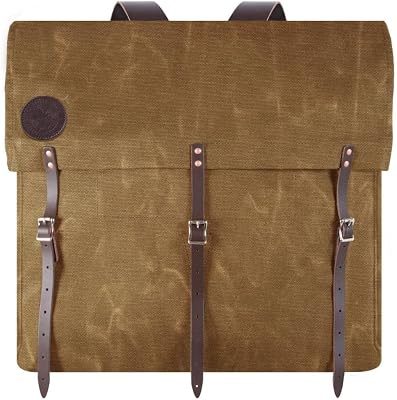
- You read the origin story firsthand. Makers that produce in the US tend to say where on their own sites. For example, Duluth Pack says it has manufactured in Duluth, Minnesota, since 1882.
- You can see the full product line. Resellers often carry only a few items.
Marketplaces are convenient too. If you shop there, use the steps in our guide to shopping American-made on Amazon so you buy from the brand's official listing rather than a third-party seller.
What do the origin rules say about online listings?
Federal rules don't stop at the store shelf. Two FTC rules are worth knowing:
- The Made in USA Labeling Rule (16 CFR Part 323) says an unqualified Made in USA label requires final assembly or processing in the US, all significant processing in the US, and all or virtually all ingredients or components made and sourced in the US. Section 323.3 applies the rule to Made in USA seals, marks, tags and stamps in "mail order catalog or mail order promotional material." The rule defines those materials to include ones "disseminated in print or by electronic means."
- The textile rules (16 CFR 303.34) require that when a clothing or other textile product is advertised in a mail order catalog or mail order promotional material, the description must clearly say whether it was made in USA, imported, or both. In a 2021 closing letter, FTC staff described how apparel company Ariat came into compliance, including by "ensuring all 'mail order advertising,' including but not limited to on the Company's own website and on Amazon.com, contains required, accurate origin information."
So when you shop for socks, sweaters or blankets online, an honest listing should tell you the origin. If you can't find it anywhere on the page, treat that as a reason to look further. Our explainer on what Made in USA means under the FTC rule covers the standard in more detail.
How can you check a "Made in USA" claim before you check out?
Run a few quick checks on the product page:
- Read the exact wording. "Made in USA" is the strongest claim. "Assembled in USA," "Made in USA with imported materials" and "Designed in USA" are different, and each means something specific.
- Look for a place, not just a flag. A factory town or state, such as socks knit in Northfield, Vermont, by Darn Tough, is more useful than a stars-and-stripes graphic.
- Match the listing to the maker's site. If a marketplace listing says Made in USA, the brand's own website should say the same.
- Watch for mixed product lines. Some brands make certain items in the US and import others. Check the specific product, not just the brand.
Our step-by-step guide to verifying Made in USA products walks through each check with examples.
Which American-made products are easy to buy local online?
Food gifts, kitchen basics and small goods from state makers are the easiest place to start, because so many are still produced in the US. Browse the best American-made gifts, the American-made apparel and boots list, or all of our best-of lists. Every product in our directory links to the maker or a seller and notes where it's made.


What's the simplest way to start?
Pick one regular online purchase this month, and ask the three questions: who's selling it, where it's made and how it gets to you. Swap it for a local store's website, a maker's own shop or an American-made alternative when you can. Small, repeatable changes add up across a year of orders.
Want more ideas like this? Our free newsletter, The American-Made Edit, shares new American-made finds and practical buying guides. You can also see what we've just added on the new arrivals page.
The American-Made Edit
Enjoyed this? Get the American-Made Edit
New verified American-made finds and Made in USA news by email, a few times a month.
You’re on the list.
Thanks for subscribing. Look for The American-Made Edit in your inbox; you can unsubscribe from any email.
Sources
- E-Commerce Retail Sales as a Percent of Total Sales (ECOMPCTSA)U.S. Census Bureau via FRED, Federal Reserve Bank of St. Louis, accessed November 9, 2026
- E-Commerce Retail Sales (ECOMSA)U.S. Census Bureau via FRED, Federal Reserve Bank of St. Louis, accessed November 9, 2026
- 16 CFR Part 323, Made in USA LabelingElectronic Code of Federal Regulations (Federal Trade Commission rule), accessed November 9, 2026
- 16 CFR 303.34, Country of origin in mail order advertisingElectronic Code of Federal Regulations (Federal Trade Commission rule), accessed November 9, 2026
- Staff Closing Letter to Counsel for Ariat International, Inc.Federal Trade Commission, March 2, 2021